
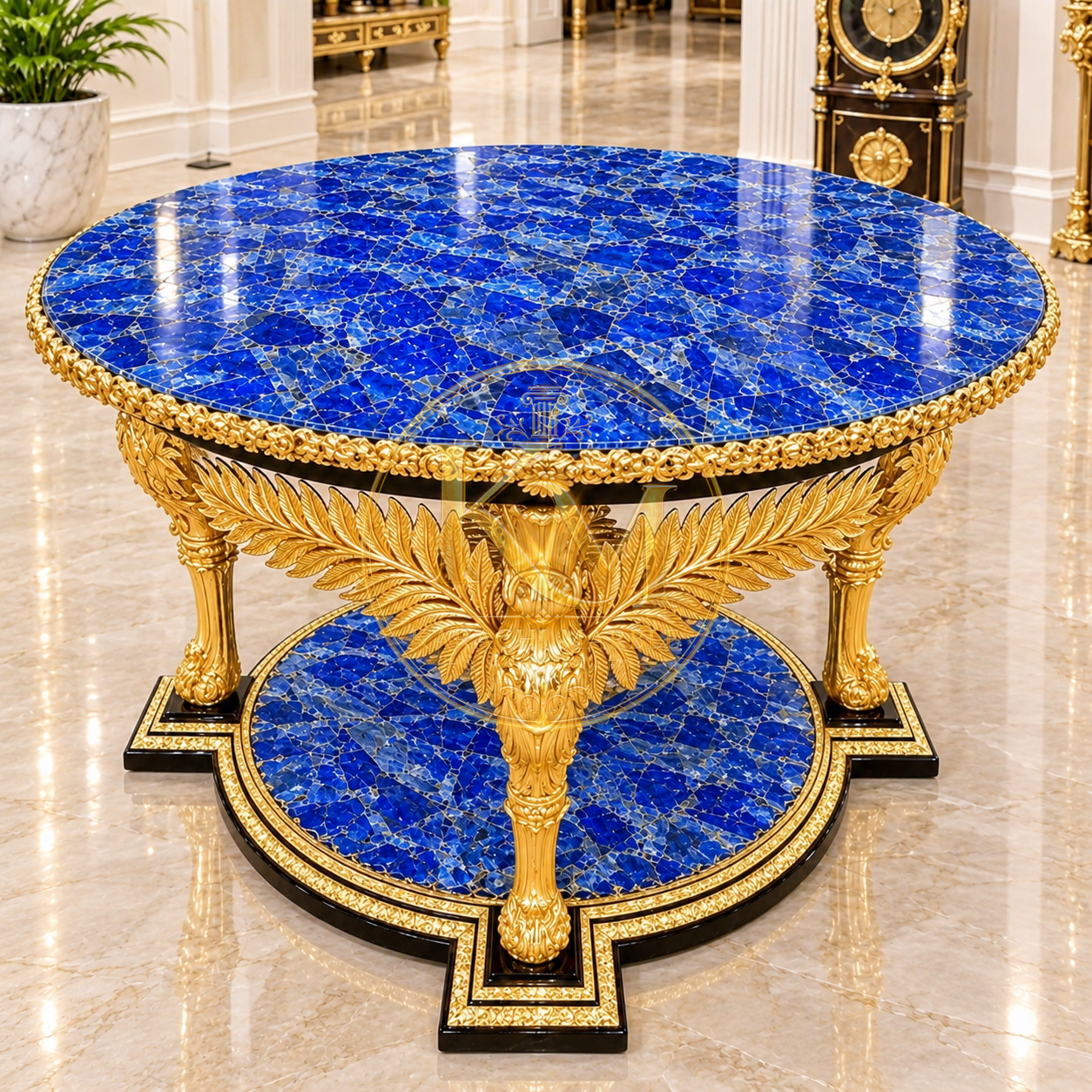
Lapis Lazuli Stone: The Complete Guide to the Royal Blue Stone
Few stones have a blue as deep and rich as lapis lazuli. It is the colour of a night sky scattered with tiny gold stars, and for more than 6,000 years kings, artists and builders have treasured it. In Pakistan and Afghanistan it is known as lajward (لاجورد), and today it is one of the most wanted natural blue stones for luxury tables, desks, sinks and décor.
This guide explains everything you need to know before you buy: what lapis lazuli is, where the best stone comes from, how to judge its quality, how to spot a fake, where it works best in a home or office, and how to care for it. Every piece shown here is made from natural lapis in our Karachi workshop.
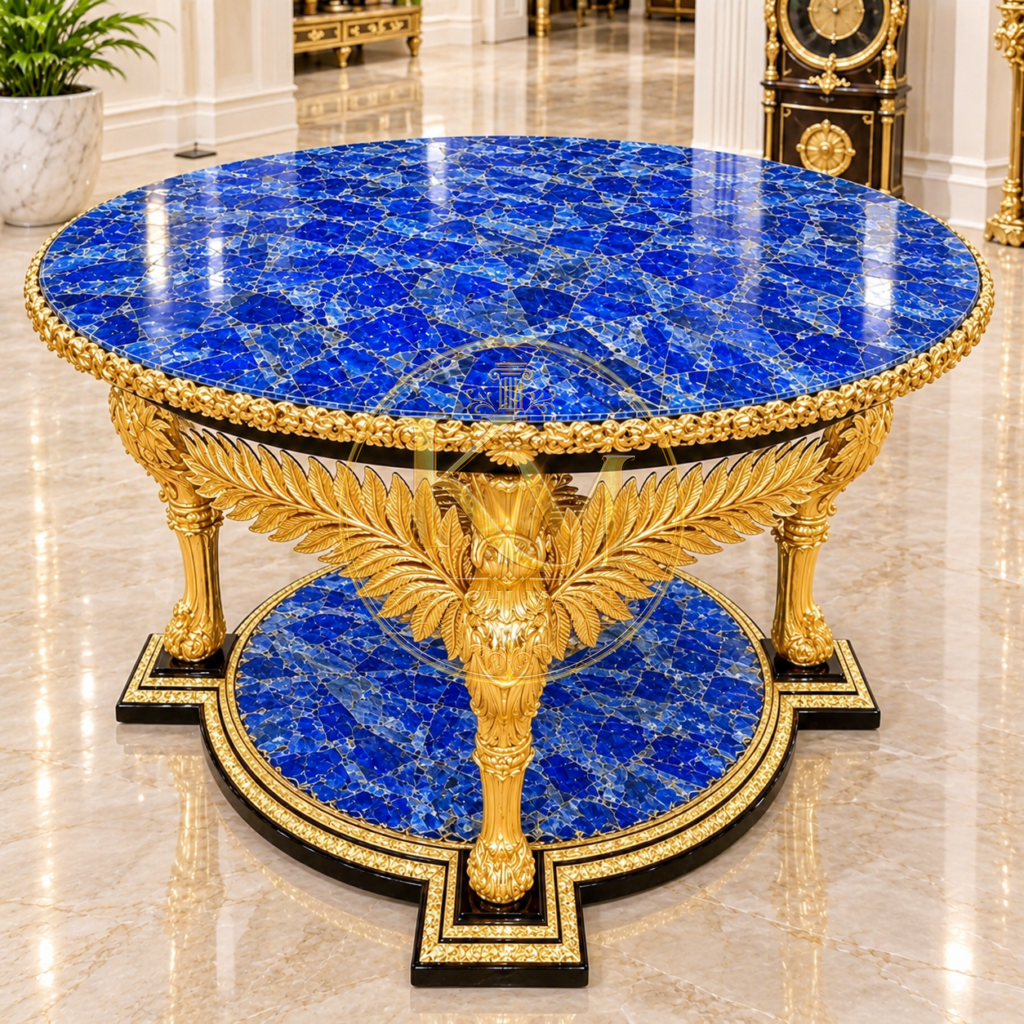
What is lapis lazuli?
Lapis lazuli is a natural blue stone. Strictly speaking it is not a single mineral but a rock made of several minerals mixed together:
- Lazurite gives the deep royal blue colour. In most lapis it makes up roughly a quarter to two fifths of the stone.
- Calcite shows up as white streaks and clouds.
- Pyrite forms the small golden flecks that sparkle like stars.
- Small amounts of other minerals such as diopside and sodalite can also be present.
This mix is exactly why no two pieces of lapis look the same. One slab may be almost solid blue, while the next has more gold sparkle or soft white veins.
The name comes from the Latin word lapis, meaning “stone”, and the Persian word lazhward, meaning “blue”. The same root gave us the words azure in English and azul in Spanish. So lapis lazuli simply means “the blue stone”.
Where does the best lapis lazuli come from?
The most famous lapis in the world comes from the Sar-e-Sang mines in the Kokcha valley of Badakhshan, in north-eastern Afghanistan. These mountain mines have been worked for more than 6,000 years and are often called the oldest continuously worked gem mines on earth. They sit high in the Hindu Kush, and because of snow and harsh weather they can only be worked for a few months each summer.
Afghan lapis is prized for its deep, even blue and fine gold pyrite. Lapis is also found in Chile, near Lake Baikal in Russia, and in smaller amounts in Pakistan and a few other countries. Chilean lapis often has more white and grey in it, while Russian lapis can be lighter in tone.
Karachi sits close to this source, which is why Pakistani workshops like ours have worked with Afghan lapis for generations. We buy the raw stone, cut it, shape it and polish it here in Karachi.
A stone of kings, pharaohs and painters
Lapis lazuli has always been a sign of wealth and power:
- Ancient Egypt: lapis was set into the famous golden funeral mask of Tutankhamun, and Egyptian royalty wore it as jewellery.
- Mesopotamia and the Indus Valley: lapis beads and inlays travelled along early trade routes from Badakhshan to the cities of the ancient world.
- Art: ground lapis made ultramarine, the most expensive blue paint in history. It reached Europe through Venice and was used by the great painters, including Vermeer in Girl with a Pearl Earring. Islamic and Mughal artists used it in fine manuscript art.
When you place a lapis table or vase in your home, you are using the same stone that decorated palaces and royal tombs for thousands of years.
Lapis lazuli colour and quality grades
There is no single official grading system, but traders and buyers judge lapis by the same simple points:
- Colour: the finest lapis is a deep, strong royal or violet-blue. Pale, greyish or greenish blue is lower grade.
- Calcite (white): less white means a higher grade. A little white veining is natural and can look beautiful, but heavy white patches lower the value.
- Pyrite (gold): a light, even sprinkle of gold flecks is ideal. Too much pyrite can make the stone look dull or brassy.
- Evenness: large areas of even blue are rare and valuable, especially in big slabs.
In simple words: deep blue, little white, a sprinkle of gold. That is the look most buyers want for luxury furniture and décor.
How to tell real lapis lazuli from fake
Because good lapis is valuable, the market has many imitations. The most common are white stones such as howlite or jasper dyed blue, sodalite sold as lapis, and “reconstructed” lapis made from crushed stone glued together. Here is how to check:
- Look for natural variation. Real lapis is never one flat, perfect blue. You will see changes in shade, small white areas and scattered gold.
- Check the gold flecks. Pyrite in real lapis is spread randomly. Sodalite, the most common look-alike, usually has no gold at all and has a lighter blue with more white veins.
- Watch for dye. Dyed stone often has colour gathered in cracks. On a small hidden spot, a cotton bud with a little nail-polish remover will pick up blue colour if the stone is dyed.
- Be careful with very cheap prices. Large pieces of genuine lapis cost real money. A suspiciously low price usually means dyed or reconstructed material.
- Buy from a seller who knows the stone. Ask where it comes from and ask to see the actual piece or the raw slab before it is made.
At Karachi Marble we work only with natural lapis lazuli, and we are happy to show you photos or videos of your actual stone before we make your piece.
Mosaic lapis vs natural lapis slabs
Large, flawless blocks of lapis are very rare. That is why lapis furniture is usually made in one of two ways:
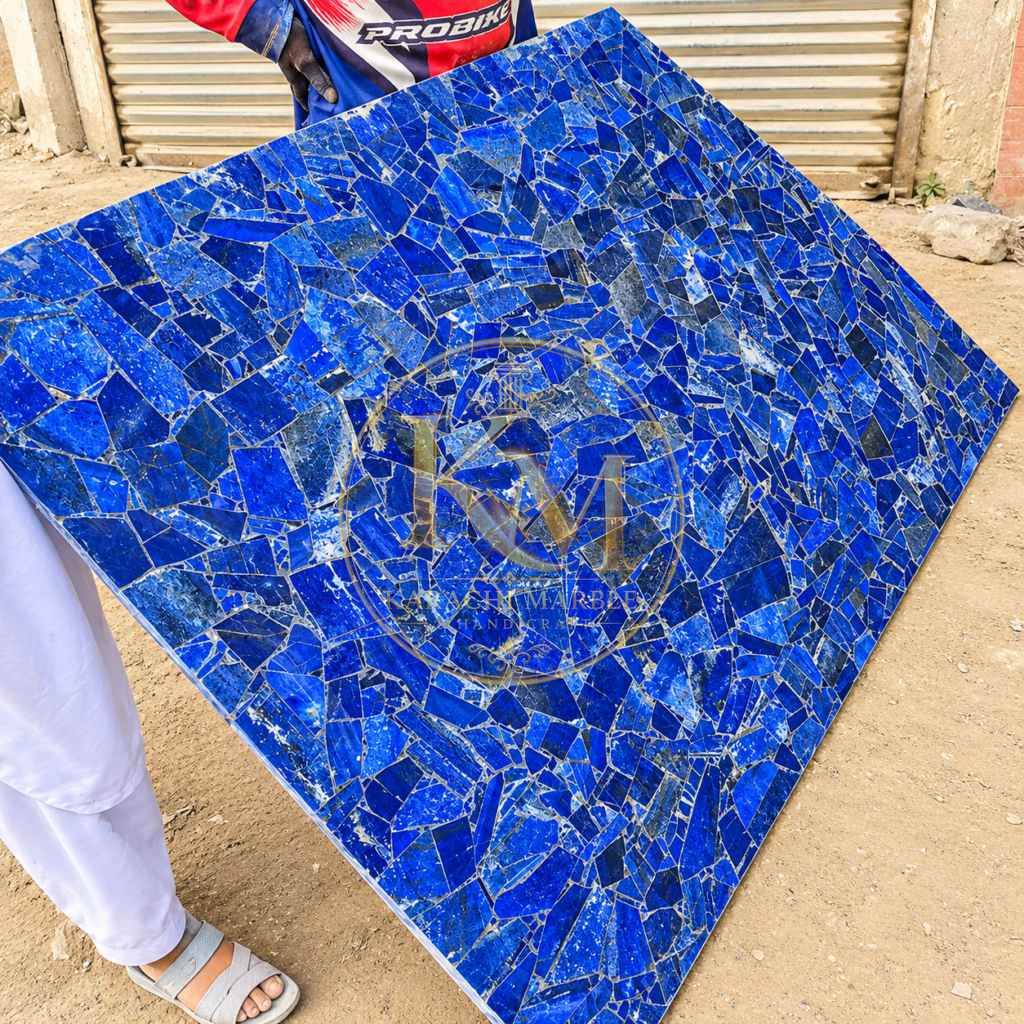
Mosaic lapis (hand-fitted pieces)
Many pieces of natural lapis are hand-cut and fitted together like a puzzle over a strong base, then ground flat and polished to a mirror shine. This allows big table tops, desks and bowls in rich, even blue, using the best colour from each piece. Most lapis tables, vases and bowls in luxury homes are made this way.
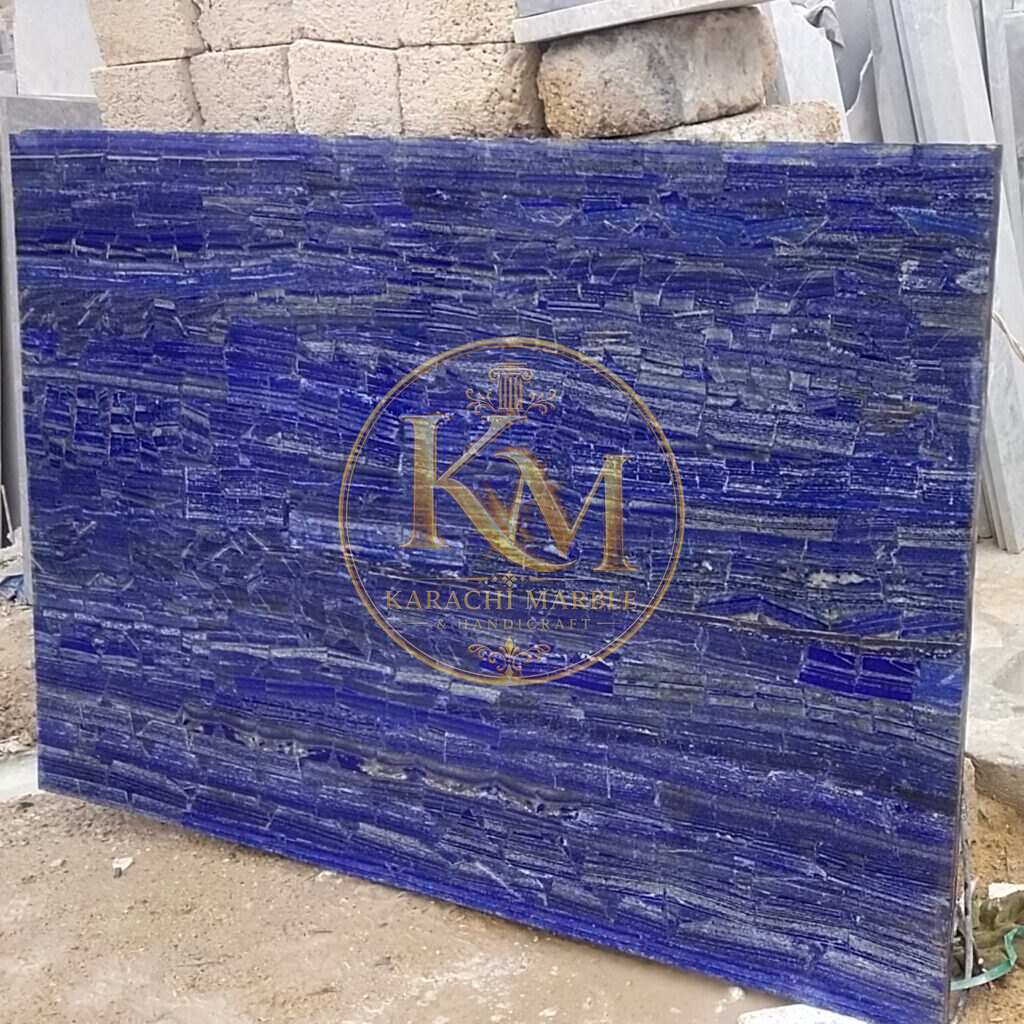
Natural lapis slabs
Slabs are cut directly from a lapis block. They show the stone’s natural layers, streaks and colour changes, and suit wall panels, table tops and countertops for clients who want the raw, natural look of the rock.
See our Deep Blue Lapis Lazuli Gemstone Slab, Blue Lapis Lazuli Slabs and Lapis Lazuli Slabs & Table Tops.
Where to use lapis lazuli in your home or office
Dining tables and executive desks
A lapis dining table or desk is a true statement piece. The deep blue looks especially rich next to cream walls, white marble floors, gold or brass details and warm lighting.
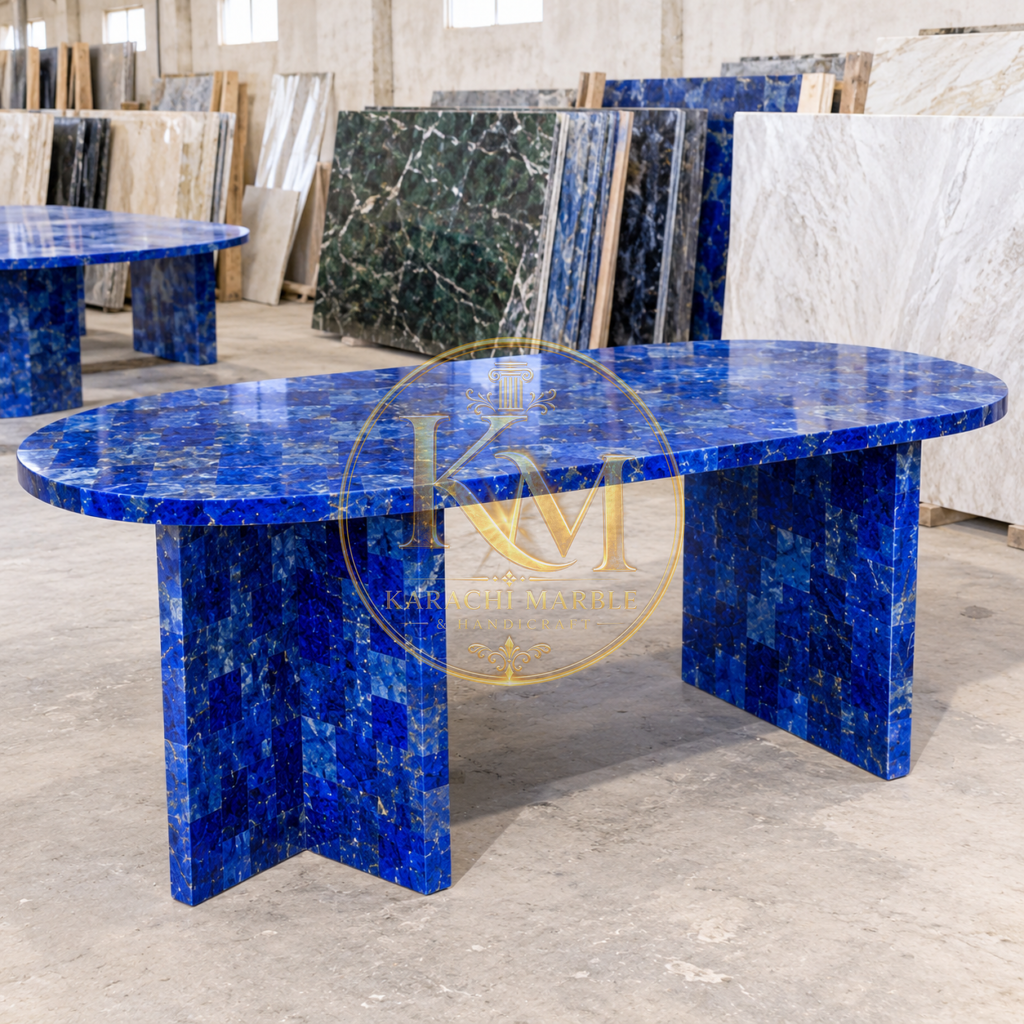
Examples: Luxury Blue Lapis Lazuli Oval Dining Table and Executive Desk, Lapis Lazuli Dining Table with Cross Pedestal Base and Lapis Lazuli Octagonal Table.
Center tables and side tables
A smaller round lapis table with a gold base is one of the easiest ways to add royal colour to a living room or hotel lobby.
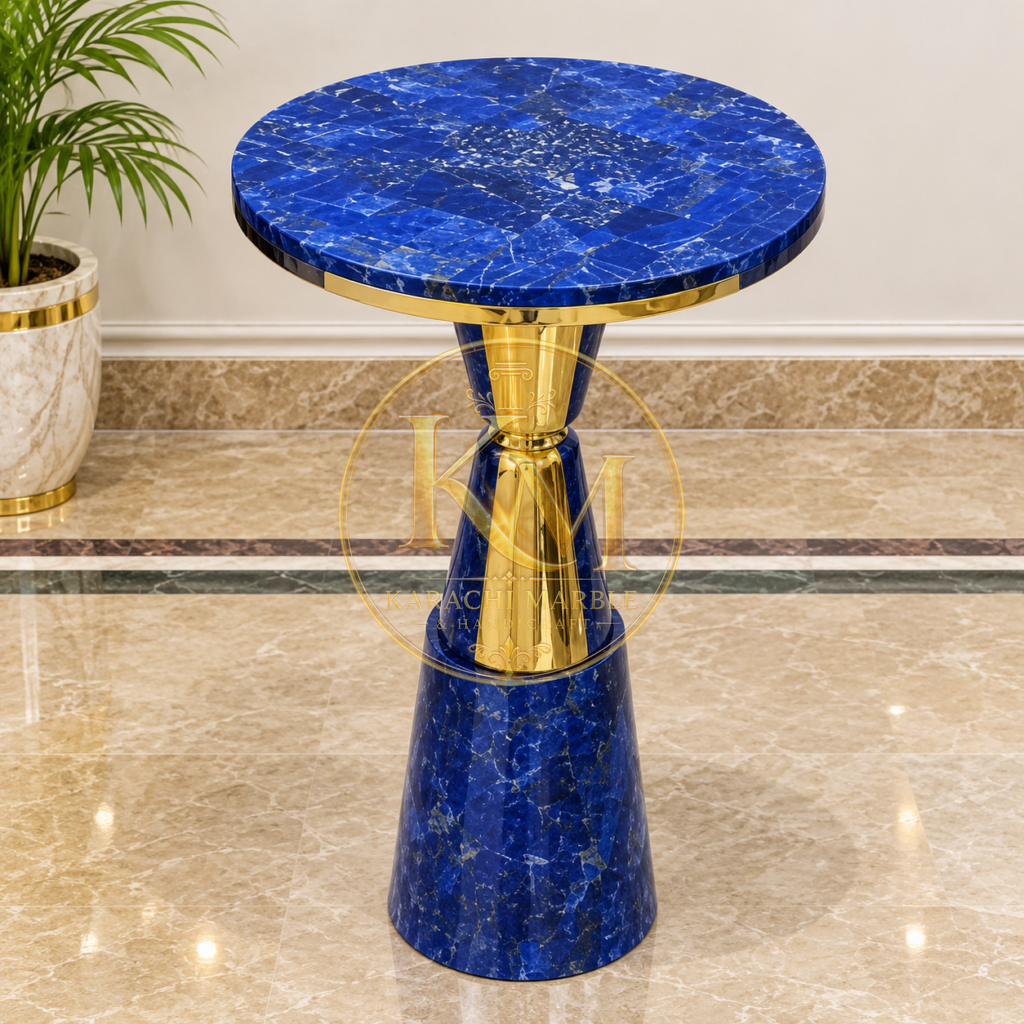
Examples: Royal Blue Lapis Lazuli Round Center Table with Gold Carved Base and Lapis Lazuli Round Side Table with Gold Base.
Vases, bowls and decorative pieces
If you want the beauty of lapis on a smaller scale, a lapis urn vase or centerpiece bowl brings the same jewel-like colour to a console, dining table or reception desk. They also make memorable gifts.
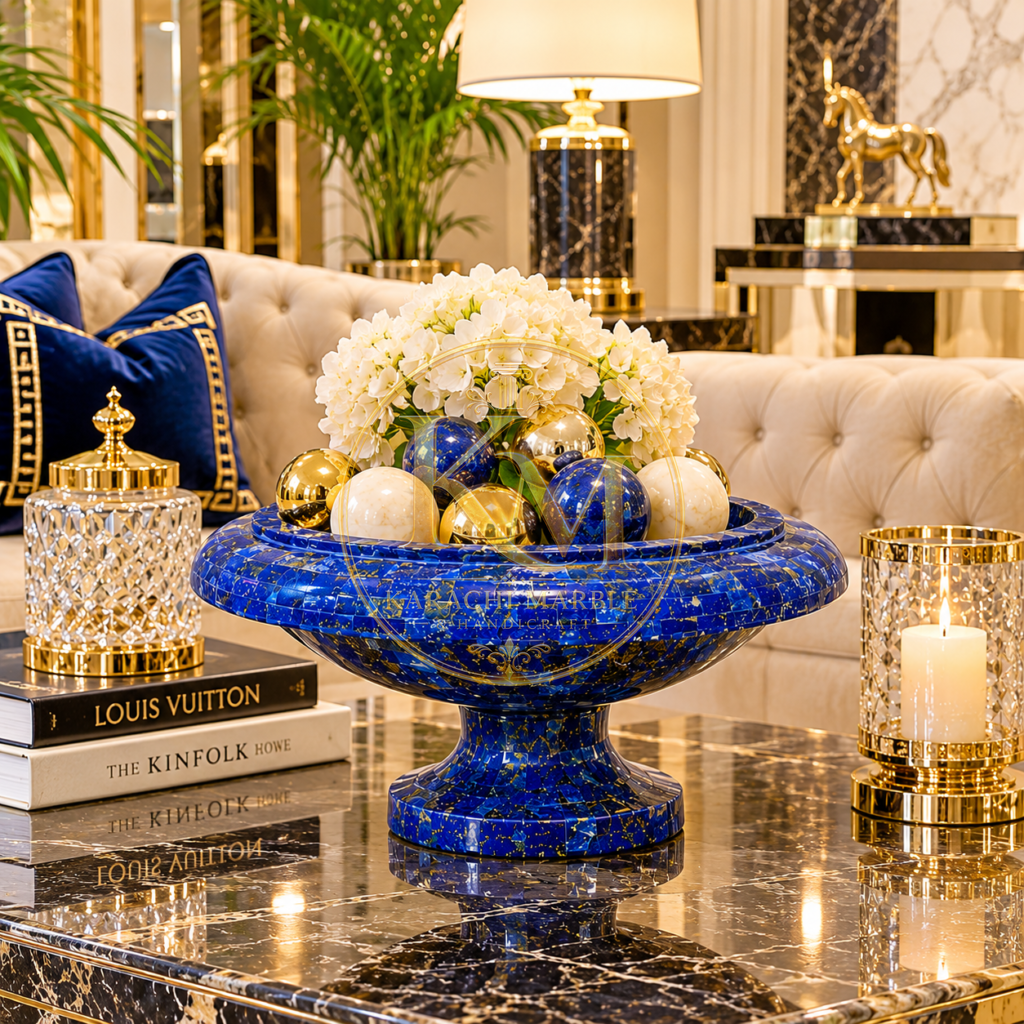
Examples: Lapis Lazuli Pedestal Centerpiece Bowl and Lapis Lazuli Urn Vase with Gold Pedestal Base.
Bathroom sinks
A lapis vessel sink turns a guest bathroom or powder room into something unforgettable. It works best where the sink is admired more than it is scrubbed, because lapis needs gentle care (see below).

Example: Blue Lapis Lazuli Round Vessel Sink. Not sure which basin style you need? Read Vanity vs Sink vs Wash Basin.
Feature walls and countertops
For hotels, villas, offices and showrooms, lapis panels can be used on feature walls, reception counters, bar tops and inlay borders in marble floors. Because lapis is an opaque stone, it does not glow from behind like onyx; if you want a lit stone wall, read What Is Backlit Stone?
Lapis lazuli and other blue stones
If you are searching for a blue stone for your project, these are the names you will often see:
- Lapis lazuli: the deepest, richest royal blue, with gold pyrite flecks. The most luxurious choice.
- Sodalite: a cheaper blue stone, usually lighter blue with white veins and no gold.
- Blue onyx and blue quartzite: lighter, sky- or sea-blue stones, often with flowing patterns. Some onyx can be backlit.
- Blue granite: a hard, grainy stone with blue tones, mostly used for practical countertops.
For a deep, royal look that no other stone can copy, lapis lazuli stands alone. For a full comparison of popular natural stones, see Marble vs Onyx vs Travertine.
How to care for lapis lazuli
Lapis is a little softer than granite and close to marble in hardness (about 5 to 5.5 on the Mohs scale). It is also sensitive to acids. With a few simple habits it will stay beautiful for generations:
- Clean gently. Use a soft cloth with warm water and a mild, pH-neutral soap. Dry it after cleaning.
- Avoid acids and harsh chemicals. Vinegar, lemon juice, bleach and strong bathroom cleaners can dull the polish.
- Wipe spills quickly, especially juice, tea, coffee and perfume.
- Use coasters and mats under glasses, hot dishes and anything with sharp edges.
- Do not drag heavy objects across the surface.
- Reseal when needed. A good stone sealer adds protection, especially on tables and sinks.
- Keep away from very high heat and strong, direct sunlight for long periods.
Why buy lapis lazuli from Karachi Marble & Handicraft?
- Natural stone only: we work with natural Afghan lapis lazuli, not dyed or artificial material.
- Made in our own workshop: every table, slab, vase and sink is cut, fitted and polished by our craftsmen in Karachi.
- Custom sizes: we can make tables, desks, slabs and sinks to your size, shape and base design.
- See before you buy: we share photos and videos of your actual piece during and after making.
- Delivery: we deliver across Pakistan and can arrange export packing for international orders.
Frequently asked questions
What is lapis lazuli called in Urdu?
In Urdu and Persian, lapis lazuli is called lajward (لاجورد).
Is lapis lazuli a gemstone or a stone?
Both. It is a natural rock, mainly made of the blue mineral lazurite, and it has been used as a semi-precious gemstone for thousands of years. In larger pieces it is used like a luxury decorative stone.
Why does lapis lazuli have gold specks?
The gold specks are tiny crystals of pyrite, a natural mineral that forms inside the stone. They are a good sign that the lapis is real.
Is lapis lazuli good for a dining table?
Yes, as long as you treat it with a little care. Use coasters and mats, wipe spills quickly and avoid acidic cleaners. A sealed, polished lapis table can last for generations.
Does lapis lazuli fade?
Natural lapis keeps its colour. If the blue fades or rubs off, the stone has most likely been dyed.
Can I order a custom lapis lazuli table or sink?
Yes. Send us the size, shape and base style you want, and we will share a design and quotation. Contact us or message us on WhatsApp.
Ready to bring the royal blue of lapis lazuli into your space? Browse our lapis tables, slabs, vases and sinks above, or get in touch for a custom piece made in our Karachi workshop.


